
Medal of Honor Monday: Army Pvt. Elden Harvey Johnson
Arizona Free Press
← Back to
Other Stories
By David Vergun
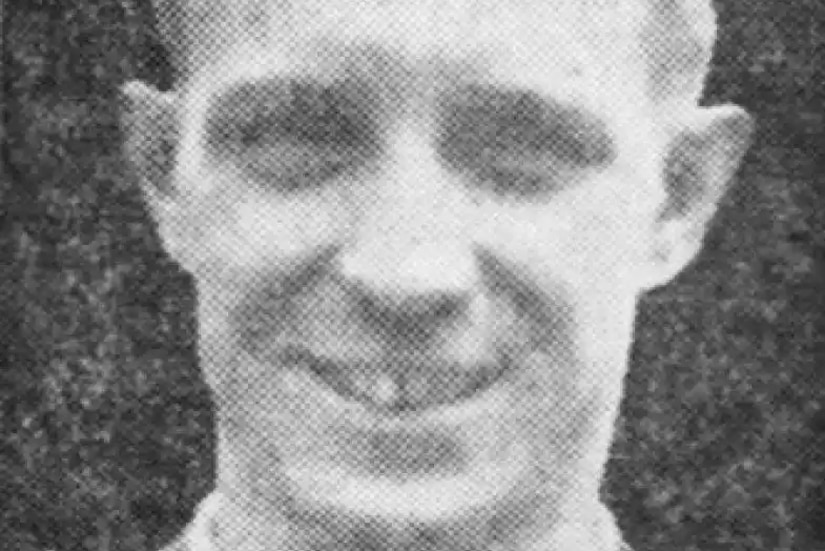
Army Pvt. Elden Harvey Johnson fought in the 1944 Italian Campaign of World War II as an infantryman and was posthumously awarded the Medal of Honor for his extraordinary heroism.
Johnson was born in Bivalve, New Jersey, Feb. 13, 1921, and grew up in East Weymouth, Massachusetts.
He enlisted in the Army in April 1943, at age 22, shortly after the United States entered World War II. Later that year, after completing basic training, he shipped out to Italy as a replacement soldier assigned to Company H, 15th Infantry Regiment, 3rd Infantry Division.
Johnson was part of the Rome-Arno Campaign, which began Jan. 22, 1944, and lasted until Sept. 9, 1944.
While on patrol June 3, 1944, his unit was attacked near Valmontone, Italy, about 30 miles southeast of Rome — three days before the D-Day invasion of Normandy, France.
It was night, but the area was brightly illuminated by enemy flares. Despite the enemy fire directed at him, Johnson advanced beyond the enemy in a slow, deliberate walk. He fired his rifle from his hip, distracting the enemy enough for 12 of his fellow soldiers to escape. Once he was within about 5 yards of the German machine gun position, Johnson killed the crew.
His Medal of Honor citation reads in part:
"Johnson elected to sacrifice his life in order that his comrades might extricate themselves from an ambush. Braving the massed fire of about 60 riflemen, three machine guns and three tanks from positions only 25 yards distant, he stood erect and signaled his patrol leader to withdraw."
Standing in full view of the enemy, Johnson reloaded, turned to the riflemen to the left and fired directly into their positions.
"He either killed or wounded four of them. A burst of machine-gun fire tore into Johnson, and he dropped to his knees. Fighting to the very last, he steadied himself on his knees and sent a final burst of fire crashing into another German. With that, he slumped forward dead," the citation states, noting that Johnson's acts of valor were an inspiration to the entire command.
Army Gen. Sherman Miles presented Johnson's Medal of Honor to his mother, Althea Bernice Johnson, May 30, 1945, in Boston.
Johnson was buried at Union Cemetery in Scituate, Massachusetts.
The former transport ship USS Pinkney was transferred to the U.S. Army Transportation Service in 1946 and recommissioned as the USAT Private Elden H. Johnson in 1947. The ship was reacquired by the Navy in 1950 and placed in service as the USNS Private Elden H. Johnson under the Military Sea Transportation Service. It went out of service in 1957.
For nearly 50 years, Johnson Barracks in Fürth, Germany, was named for him. The Army installation housed the 16th Engineer Battalion, quartermaster offices and other administrative and support functions. The installation was sold back to the Germans in the early 2000s and is now a business park. Additionally, Weymouth is the only town in the U.S. with five Medal of Honor recipients: Johnson, Thomas W. Hamilton, William Seach, Frederick C. Murphy and Ralph Talbo.
On May 26, 2025, the city dedicated five bronze statues to honor them at the Ralph Talbot Amphitheater in Weymouth, which is adjacent to a veterans memorial wall that lists the names of city residents who have served during times of war.
This article is part of a weekly series called "Medal of Honor Monday," in which we highlight one of the more than 3,500 Medal of Honor recipients who have received the U.S. military's highest medal for valor.