
Air Force, Army, Marines Unite for Joint Air Traffic Control Training
Arizona Free Press
← Back to
Other Stories
By Lauren Boggs, 78th Air Base Wing
Airmen, soldiers and Marines completed two weeks of airfield training at Robins Air Force Base, Georgia, learning valuable skills while highlighting the power of military interoperability.
The joint training brought together the Air Force's 53rd Combat Airfield Operations Squadron, the Marine Corps' Air Control Squadron 2 and the Army's Air Traffic Services Command.
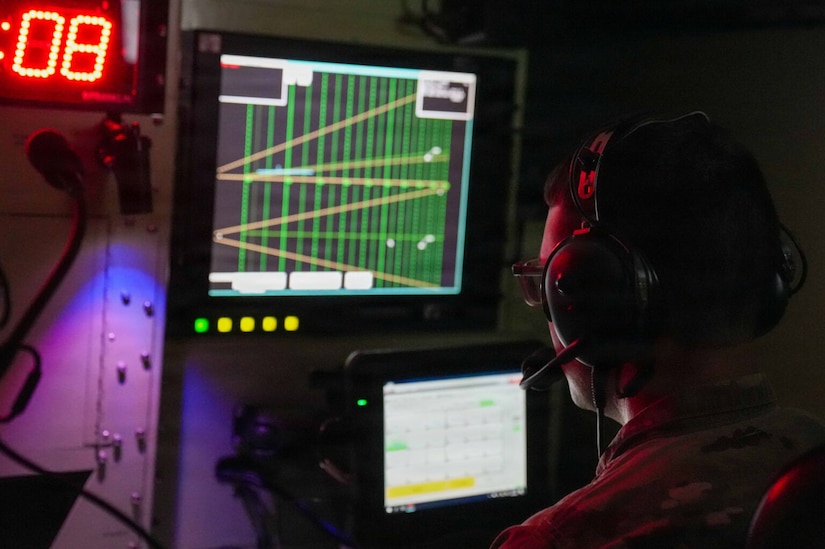
The training, led by the Air Traffic Services Command's quality assurance division, centered on the Air Force's new, deployable, airport surveillance radar and precision approach radar system, also known as an air traffic navigation, integration and coordination system. Service members were trained in setting up the system's version 10 radar, operations shelter and lighting systems used to create runways in austere and deployed environments. The air traffic controllers also took turns practicing precision approaches and landings.
"It's a unique system, so we need a unique kind of training," said Air Force Staff Sgt. Jacob Terry, 53rd CAOS combat airfield watch supervisor. "The knowledge that is able to come out and provide, in both a controlling and maintaining aspect, is really what we needed to be able to deploy the system and operate it the way that it needs to be operated."
While new to the Air Force, the system has been operated by the Army for over 20 years. It's the only air traffic control system that all three branches have in common.
According to John Kelley, the quality assurance lead for the Air Traffic Services Command, the Army's experience with the system is a major perk, giving other air traffic control service members the opportunity to learn from years of practical application.
The quality assurance division, made up of six air traffic controllers and five maintainers, regularly visits various military bases to train their counterparts, reviews and verifies technical orders and offers courtesy inspections.
"We're here to teach them everything that we know on how to troubleshoot and maintain the system, how to set it up and actively use it right away and give them ideas of how they would implement it in a real-world environment," said Army Sgt. 1st Class Wigetes Ho, an air traffic controller maintenance evaluator assigned to the Air Traffic Services Command.
"On the air traffic control side, our role is to sit inside the shelter with their air traffic controllers and assist them in learning how to do precision approaches and the phraseology, terminology and theory behind them to get them to the point where they're actually employing it themselves, can get their certification and safely land aircraft," Kelley said. "The goal is to get them where they're self-sufficient."
Beyond the technical skills, the training fostered crucial inter-branch relationships in a relatively small career field.
"Another big purpose of this training was to build rapport between branches," said Army Sgt. 1st Class Bernard Green, quality assurance division evaluator and noncommissioned officer in charge. "We don't work with the Air Force or Marines a lot, especially for air traffic controllers. Building that rapport between branches and learning from each other and having connections that you can reach out to in another branch and ask for help, while it may not have been the main goal of this training, it was a positive outcome."
The connections create even stronger interoperability in deployed environments, allowing air traffic control service members to operate the system together, if required.
"It just ties the whole picture together when it comes to airfield operations between the Army, Air Force and Marine Corps," Terry said.