
Thomas Paine: Influencer of the Patriot Cause
Arizona Free Press
← Back to
Other Stories
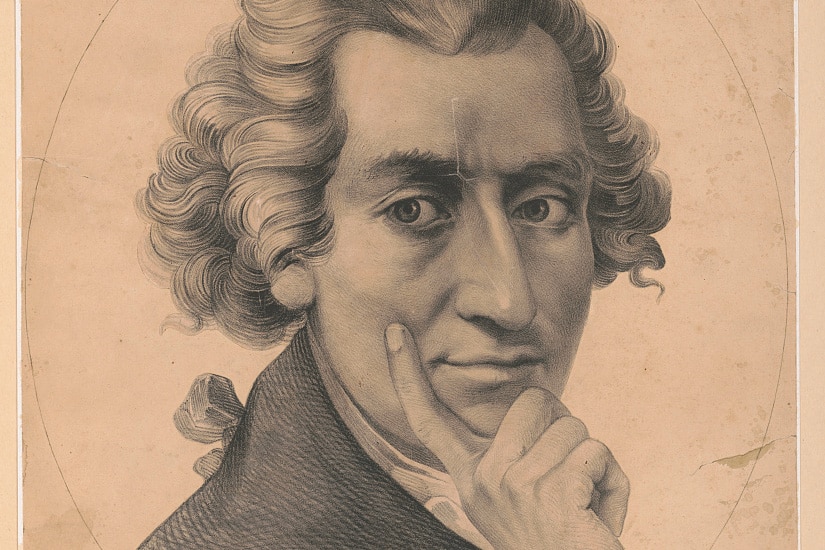
By David Vergun
Although the American Revolutionary War began April 19, 1775, in the months that followed, many of those in the 13 colonies still hoped the British crown would redress their grievances.
Beginning Jan. 10, 1776, sentiment shifted with the publication of Thomas Paine's "Common Sense," a 47-page pamphlet that laid out a convincing rationale for independence.
The pamphlet was so popular that about 500,000 copies were sold, more than all other reading material except the Bible. At the time, the colonists numbered about 3 million and because copies were passed around many more than half a million read it.
Born in England in 1737, Paine became a corset maker. After meeting the American diplomat Benjamin Franklin in London in 1774, he sailed to America and settled in Philadelphia.
Over the course of 1775, he watched with alarm as the disagreements between the colonies and Britain became irreconcilable and he was convinced independence was the only solution.
At the suggestion of his friend Benjamin Rush, a Philadelphia doctor and Second Continental Congress member, Paine wrote "Common Sense."
"In the following pages I offer nothing more than simple facts, plain arguments and common sense," the pamphlet began.
"A government of our own is our natural right," he wrote, concluding that "nothing can settle our affairs so expeditiously as an open and determined declaration for independence."
Paine's straightforward prose appealed to everyday Americans. In "Common Sense," he used examples from English history, the Bible and other writings to criticize the British government.
Paine donated all proceeds from his pamphlets to the Continental Congress to support the war effort. His influence led many to consider him a Founding Father.
The pamphlet didn't convince all colonists: about 20% remained loyal to Britain, 45% were Patriots and the rest were mostly neutral.
Thomas Paine is credited with coining the name "United States of America" and urging Congress to adopt it, June 29, 1776. Days later, the United States of America declared its independence.
Paine later published "The American Crisis," a second pamphlet designed to encourage American soldiers. Gen. George Washington, commander of the Continental Army, ordered his officers to read the pamphlet to their soldiers before crossing the Delaware River to attack the British in Trenton, New Jersey, December 1776.
Following the war, Paine moved to France, where he supported the French Revolution and published the influential "Rights of Man" before returning to New York City, where he died in 1809.