
Joint Force Comes Together for Special Operations Sniper Competition
Arizona Free Press
← Back to
Other Stories
By Ken Kassens, U.S. Army John F. Kennedy Special Warfare Center and School
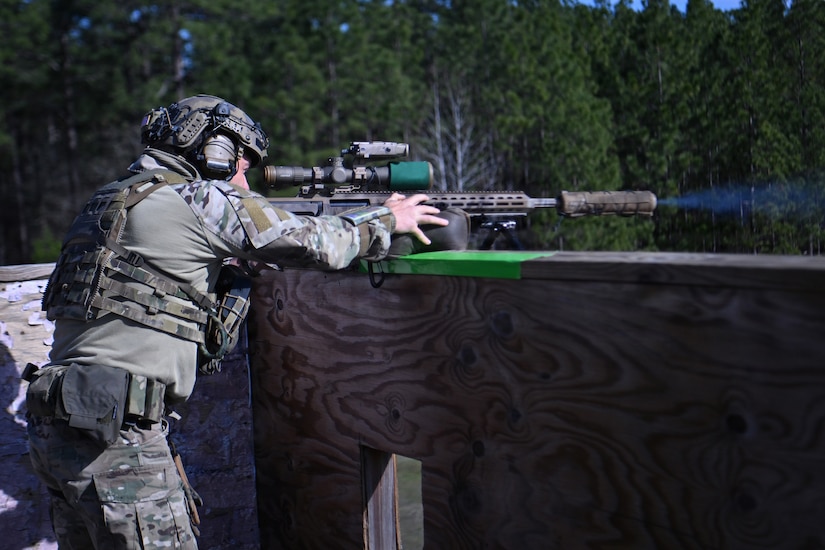
In a demanding test of precision, endurance and teamwork, 17 elite sniper teams participated in the U.S. Army Special Operations Command International Sniper Competition at Fort Bragg, North Carolina, March 15-19.
The U.S. Army John F. Kennedy Special Warfare Center and School hosted the competition, now in its 17th year. Special Forces sniper course instructors and leadership designed the various challenges and served as officials and scorekeepers.
"This competition represents the pinnacle of the sniper craft," said Army Col. Simon Powelson, commander of the 2nd Special Warfare Training Group. "We have brought together highly trained teams from across the joint force and partner nations. These competitors are not just here by chance; they are the product of intense and specialized training within their respective units."
The five-day event included special operations forces representing multiple allied nations with participants drawn from the ranks of Army Special Forces, Army Rangers, Naval Special Warfare Command, Marine Forces Special Operations Command and Coast Guard units.
Designed to strengthen interoperability and foster esprit de corps among partner forces, the competition featured a series of complex engagements conducted both during the day and under the cover of darkness that pushed competitors to their physical and mental limits.
Throughout the week, sniper teams of two highly trained operators were evaluated across multiple ranges at Fort Bragg. Competitors demonstrated proficiency with sniper rifles, carbines and pistols, engaging at distances of up to 1,200 meters while adapting to constantly changing scenarios.
The opening day set the tone for the grueling challenge ahead. Persistent thunderstorms brought intermittent rain and strong winds, forcing teams to contend with reduced visibility, slick terrain and unpredictable shooting conditions, adding a layer of realism for competitors.
"The weather played a significant role," said Timothy Gozelski, the sniper course manager. "Our goal with the wind and rain was to make sure the visibility was the same for all the teams."
In the following days, the weather cleared, but conditions remained poor. Temperatures dropped to 35 degrees, and variable winds swept across the ranges, complicating long-distance shots.
Competitors had to calculate wind speed and direction on the fly while maintaining communication and coordination with their teammates.
"Good, clear, concise communication is a must," said Richard Cuza, a sniper course instructor. "It's beyond important; it's crucial."
Each stage of the competition emphasized not only marksmanship but also teamwork.
Sniper pairs had to locate, range and engage multiple targets in rapid succession, often while maneuvering between firing positions. Communication, trust and synchronization proved just as critical as shooting accuracy.
"Being in sync with your teammate is equal in importance to communication," Gozelski said. "To be successful, the two have to talk and be on the same page in everything they do."
Organizers emphasized the competition was more than a test of skill. It brought together international partners and joint force teams in a high-stress training environment. As a result, the event allowed competitors to build relationships, and it improved the joint forces' ability to operate seamlessly in real-world missions.
"It's awesome to have international teams competing," Gozelski said. "It helps with interoperability and being able to look at each other's equipment and techniques. It's not just about competing; it's about learning some things from our allies and how they operate. All the foreign teams are thrilled to be here. This competition helps us in expanding operational expertise."
Cuza added that "it was great to have allies and teams from our sister services here. It will help us in working together and that's important."
After five days of intense competition, the Army Special Operations Command team emerged as the overall winner, demonstrating consistent performance across all events and conditions. The Army's 3rd Special Forces Group team finished second.
As the competition concluded, participants departed not only with sharpened skills but with stronger bonds between allied forces and sister services.
"Most importantly, this competition is a powerful vehicle for building esprit de corps among an elite group of warriors who may one day serve alongside each other," Powelson said.