
Medal of Honor Monday: Army Col. Jack Jacobs
Arizona Free Press
← Back to
Other Stories
By Katie Lange
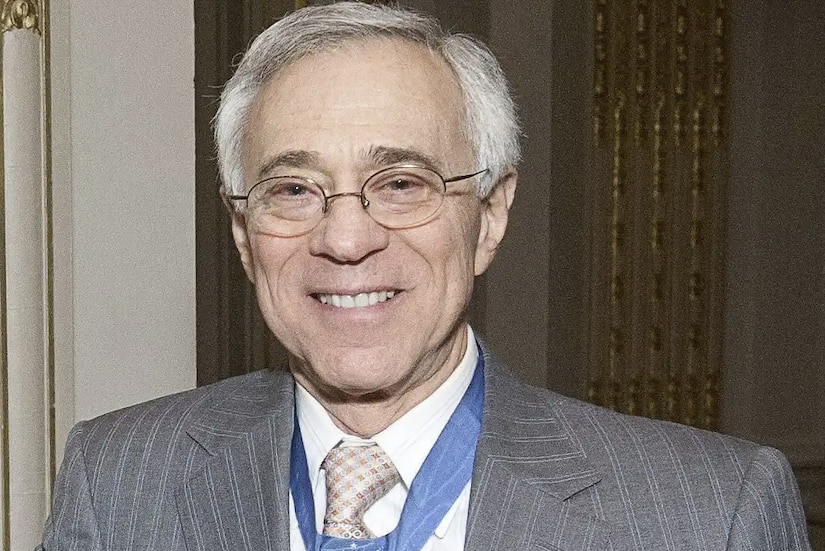
Army Col. Jack Howard Jacobs was just a first lieutenant when he saved more than a dozen lives during an intense firefight in the swamplands of Vietnam. His actions during that incident and throughout his deployment made him one of the most decorated soldiers of the war, including the nation's highest medal for valor.
Jacobs was born Aug. 2, 1945, in Brooklyn, New York, to Rebecca and David Jacobs, a World War II veteran. He had a brother and a sister.
The family lived in Queens for a time before they moved to Woodbridge, New Jersey, in the mid-1950s, when Jacobs was in sixth grade. He loved baseball and was focused on his academics.
After graduating from Woodbridge High School, Jacobs attended Rutgers University, where he earned a bachelor's degree. During his studies, he married a woman named Karen, and they went on to have two children.
Jacobs also took part in the school's ROTC program. After graduating in 1966, he was immediately commissioned into the Regular Army as a second lieutenant assigned to the 82nd Airborne Division.
However, when his unit, the 3rd Brigade, was ordered to deploy to Vietnam in September 1967, he received separate orders to serve as an advisor for Vietnamese infantry battalions. In a 2002 Library of Congress Veterans History Project interview, Jacobs said he was selected for the role because of his college degree. He petitioned to go with his unit instead, but his request was denied.
Prior to his deployment, Jacobs spent 13 weeks learning Vietnamese and the country's culture — lessons he said proved extremely useful when he arrived as the assistant battalion advisor for a South Vietnamese army battalion.
Jacobs said the first few months of his deployment were spent conducting many patrols, and at first, they made very little contact with the enemy. But that all changed after the Tet Offensive kicked off in late January 1968.
By March 9, 1968, Jacobs' battalion was part of an operation in the flat swamplands and rice paddies of Kien Phong Province in the Mekong Delta, near the Cambodian border.
"We received some intel that the enemy was probably going to be located in a specific place, so they mounted an operation that included my battalion attacking from boats over what passed for a beach — it was actually a riverbank," Jacobs said in his 2002 interview.
But as his battalion advanced, it came under intense mortar and machine gun fire from a massive Viet Cong presence that was positioned in well-fortified bunkers. Jacobs' battalion tried to get into an attack formation, but they were halted by more devastating enemy fire. Jacobs, who was with the command element of the company in the front, quickly called for and directed airstrikes onto the enemy.
"We were caught in the middle of this ambush," he said. "A lot of people were killed and wounded."
The intense enemy fire caused heavy casualties to the command group, including injuring the company commander. Jacobs himself had suffered a head wound that impaired his vision, but he quickly assumed command, ordering the soldiers to withdraw to somewhere more covered where they could set up a defensive perimeter.
With no regard for his own safety, Jacobs returned to the open area despite the intense enemy fire to evacuate a seriously wounded advisor. He managed to get the man to a wooded area where he administered lifesaving first aid. Jacobs then returned to the fire-strewn area to evacuate his wounded company commander.
"The enemy had come out from its positions and were killing the wounded and taking weapons," Jacobs said. So, he continued his mission, dodging bullets to make repeated trips across open rice paddies to evacuate more wounded and their weapons. Three times, he was able to drive off squads of Viet Cong, singlehandedly killing three enemy combatants and wounding several others.
"When I finally had my wits about me, I decided I would go along the tree line myself … and be able to engage them effectively, because they were looking in another direction," Jacobs told the VHP. "Eventually, I sat down in a wooded area and physically couldn't get up."
Jacobs was evacuated to a hospital, but not before he'd saved the lives of one U.S. advisor and 13 Vietnamese soldiers. Thanks to his actions, the South Vietnamese company he was with reorganized and fended off the enemy forces.
When Jacobs recovered and returned to the U.S., he served as a company commander at Fort Benning, Georgia. That's where he learned he had been nominated for the Medal of Honor — a commendation that left him "stupefied" and "astounded."
On Oct. 9, 1969, then-Capt. Jacobs received the nation's highest medal for valor from President Richard M. Nixon during a White House ceremony. He'd also earned three Bronze Stars and two Silver Stars during his deployment, making him one of the most decorated soldiers of the war.
Jacobs continued his military career. The Army sent him back to Rutgers to get a master's degree in international relations and comparative politics, a subject he later taught at the U.S. Military Academy at West Point.
Jacobs voluntarily returned to Vietnam for another deployment in July 1972, continuing his role as an advisor, this time for the 1st Vietnamese Airborne Battalion. He returned to the U.S. in January 1973 after suffering minor injuries from an artillery round.
From there, Jacobs worked his way up the ranks, eventually commanding his own battalion in Panama in the early 1980s. He went on to teach at the National War College in Washington before retiring as a colonel in 1987 after 21 years of service.
In his 2002 VHP interview, Jacobs said he thinks the medal makes its recipients modest.
"I think everybody who receives the Medal of Honor receives it in his heart for all the soldiers with whom he served," he said. "Receiving the award has made me a different person — made me a better person, a more thoughtful person."
In regard to his Medal of Honor actions, Jacobs also reflected, "I hope that if I had it to do all over again, knowing what I know now, that I would have the fortitude to do it again."
After retirement, Jacobs worked in investment banking and real estate development, and he also served as a military analyst for NBC News. He currently serves as an advisor for the Code of Support Foundation, a nonprofit that provides assistance to veterans and military families.
In 2008, Jacobs published a memoir, "If Not Now, When? Duty and Sacrifice in America's Time of Need." In 2020, he was inducted into the Army ROTC Hall of Fame.
Jacobs divorced but eventually remarried a woman named Susan, and they had a son. The couple currently lives in Far Hills, New Jersey.
This article is part of a weekly series called "Medal of Honor Monday," in which we highlight one of the more than 3,500 Medal of Honor recipients who have received the U.S. military's highest medal for valor.